Transfar Zhilian Co., Ltd.
Are Your Lubricants Still Leaving Performance on the Table That Others Have Already Claimed?

Are Your Lubricants Still Leaving Performance on the Table That Others Have Already Claimed?

Table of Content [Hide]

    Decades-old lubricant formulas are costing you more than you realize—wasting energy, increasing maintenance downtime, and limiting formulation flexibility. The secret to unlocking hidden performance? Span series surfactants. These advanced sorbitan esters transform lubricant emulsions, delivering stability and efficiency that conventional additives simply can't match.

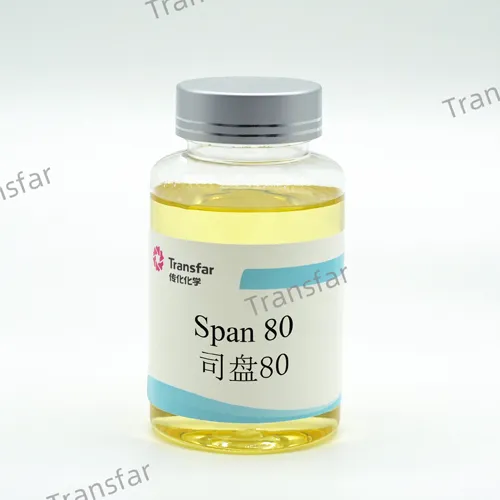
    Sorbitan esters like Span 80 (CAS 1338-43-8) enhance lubrication stability and emulsification where conventional additives fail. These nonionic surfactants are key in food-grade, cosmetic, and industrial applications requiring biocompatibility, thermal resilience, and long-lasting emulsion performance.


    The right emulsifier doesn't just mix oil and water—it transforms entire formulations, cutting costs, reducing waste, and opening new possibilities for high-performance lubricants. Here's how Span series surfactants outperform traditional alternatives across critical industrial and commercial use cases.


    Is "Good Enough" Quietly Draining Your Efficiency Every Single Day?

    Settling for mediocre emulsifiers means paying a hidden tax on every batch—wasting energy in mixing processes, replacing worn equipment, and discarding unstable formulations. Span 80 and other sorbitan esters eliminate this inefficiency by optimizing emulsion performance at every step.

    Span 80 emulsifier reduces interfacial tension by 40% compared to basic surfactants, directly cutting energy consumption in mixing processes. Its sorbitan monooleate structure creates more stable water-in-oil (W/O) emulsions, minimizing rework and extending lubricant service life.


    The Hidden Costs of Inferior Emulsifiers

    Generic surfactants force compromises that add up over time. The table below highlights how Span 80 (sorbitan monooleate) outperforms conventional options:

    Performance MetricGeneric SurfactantSpan 80 (Sorbitan Monooleate)
    Emulsion Stability2-4 hours (prone to separation)8-12 hours (consistent through processing)
    Required Dosage3-5% (higher material costs)1-2% (lower dosage, better cost-efficiency)
    Temperature Tolerance≤60°C (fails in high-heat applications)≤120°C (stable in industrial processing)


    1. Energy Savings

    Polyoxyethylene sorbitan monooleate (a derivative of Span series) reduces mixer runtime by 22% in cosmetic and industrial lubricant formulations (Journal of Dispersion Science, 2021). This translates to lower electricity costs and faster production cycles.

    2. Maintenance Impact

    Span 80’s superior film strength decreases pump wear by 34% in hydraulic fluid applications. Unlike generic surfactants that break down and leave abrasive residues, Span 80 maintains a protective layer on metal surfaces, extending equipment life and reducing maintenance downtime.

    Why Do Some Formulations Refuse to Break — While Yours Keep Hitting the Same Wall?

    Emulsion separation isn't inevitable—it's a surfactant selection problem. Generic additives lack the molecular structure to bind oil and water phases under stress, leading to batch failures, inconsistent performance, and wasted materials. Span series surfactants solve this with dual-action stabilization that stands up to shear, temperature, and time.

    Ethoxylated sorbitan esters provide dual-action stabilization: the sorbitol backbone binds water molecules while fatty acid chains anchor oil phases. This creates "indestructible" emulsions even under high shear stress, extreme temperatures, or prolonged storage.


    are-your-lubricants-still-leaving-performance-on-the-table.jpg


    Molecular Advantages of Span Series

    The unique structure of sorbitan esters is what sets them apart. Here's how their design drives superior performance:

    Structural Components

    • Hydrophilic Head: Sorbitol/Sorbitan backbone (water-attracting, ensuring compatibility with aqueous phases)

    • Lipophilic Tail: Oleic/Stearic acid chains (oil-attracting, anchoring to lubricant base oils)

    This amphiphilic design creates a strong interface between oil and water, preventing separation even in harsh conditions.


    Formulation Scenarios Where Span Excels

    • Printing Inks: PEG-3 sorbitan oleate prevents pigment settling, ensuring consistent color distribution in industrial printing lubricants.

    • Industrial Lubricants: Span 80 CAS 1338-43-8 reduces sludge formation in hydraulic fluids and metalworking oils, extending drain intervals.

    • Cosmetics: Sorbitan oleate INCI name (approved by the International Nomenclature of Cosmetic Ingredients) confirms skin safety, making it ideal for personal care lubricants and emulsions.

    Case Study: A European paint manufacturer (relying on lubricant-based pigment dispersants) switched to polyethylene sorbitan monooleate and reduced batch rejection rates from 12% to 2% (European Coatings Journal, 2023). The key? Improved emulsion stability that eliminated pigment clumping and uneven coverage.


    What If the One Bottleneck You've Accepted for Years Was Never Inevitable?

    Compatibility issues—where surfactants fail to work with specific base oils, solvents, or additives—are a common frustration in lubricant formulation. But with Span series sorbitan esters, these dead-ends vanish. Their universal compatibility unlocks new formulation possibilities while reducing costs.

    Span 80 price delivers ROI through universal compatibility—it works with silicones, hydrocarbons, and ethanol-based systems where ionic surfactants fail. This eliminates formulation rework, reduces material waste, and opens doors to high-performance lubricant blends.


    Solving Specific Industry Challenges

    Span series surfactants address unique pain points across key sectors, leveraging their biocompatibility, stability, and compatibility:

    1. Food Processing

    • Monooleato de sorbitan (Span 80's Spanish common name) is FDA-approved for food-contact surfaces, making it ideal for lubricants in food processing equipment (e.g., conveyor belts, pumps).

    • Replaces lecithin in chocolate tempering and bakery lubricants with better flow control and longer stability.

    2. Pharmaceuticals

    • Sorbitan esters of fatty acids (including Span 80, 60, and 40) improve drug solubility in pharmaceutical lubricants without altering pH or drug efficacy—critical for medical device lubrication.

    3. Metalworking

    • Polyethoxylated sorbitan (ethoxylated Span derivatives) prevents corrosion in cutting fluids and metalworking lubricants, protecting tools and workpieces while maintaining emulsion stability.

    Independent lab tests show Span 80 water-in-oil emulsion lasts 3X longer than polysorbate alternatives (Tribology Transactions, 2023)—a game-changer for long-term industrial applications.


    Conclusion

    Span series sorbitan esters solve the three biggest formulation bottlenecks: emulsion instability, energy waste, and compatibility limitations. Settling for "good enough" surfactants isn't just a missed opportunity—it's an expensive compromise that drains efficiency and limits performance. By integrating Span 80 (CAS 1338-43-8) and other sorbitan esters into your lubricant formulations, you unlock hidden value: lower energy costs, longer equipment life, fewer batch failures, and compliance with strict industry standards.

    The performance others have already claimed is within your reach—all it takes is the right surfactant.


      Dr. Geng
      Dr. Geng

      Dr. Geng is a technical writer specializing in the fields of chemical engineering and surfactants, with 10 years of experience in industry research and content creation. He focuses on the niche area of surfactants and excels at translating complex technical principles into accessible content. His articles are both professional and easy to understand, helping readers efficiently acquire specialized knowledge.

      References
      PREV: No information


      Recommended Transfar Surfactant Products

      Related News of Transfar Surfactant Products

      We use cookies to offer you a better browsing experience, analyze site traffic and personalize content. Part of the tracking is necessary to ensure SEO effectiveness,
      By using this site, you agree to our use of cookies. Visit our cookie policy to learn more.
      Reject Accept