Transfar Zhilian Co., Ltd.
Mastering Low-pH Facial Cleanser Systems in 2026: Why Sodium Cocoyl Alaninate Delivers Reliable Foam and Mildness

Mastering Low-pH Facial Cleanser Systems in 2026: Why Sodium Cocoyl Alaninate Delivers Reliable Foam and Mildness

Table of Content [Hide]

    In 2026, facial cleanser brands face a formulation paradox that is becoming harder to ignore. Consumer demand for skin-friendly, low-pH cleansers — formulas tuned to the weakly acidic range of approximately 4.5 to 6.5 that aligns with the skin's natural acid mantle — is growing faster than the surfactant industry’s ability to deliver reliable foam performance at those pH levels. The problem is structural: most conventional anionic surfactants, and many amino acid surfactants, are optimized for neutral to alkaline pH ranges where their ionization state and micelle geometry produce the dense, stable foam that consumers associate with effective cleansing. Move the formula pH down toward 5.5 to 6.0, and foam volume drops, bubble stability weakens, and viscosity can become unpredictable — triggering consumer complaints about "weak lather" that undermine the premium positioning the brand is trying to build.

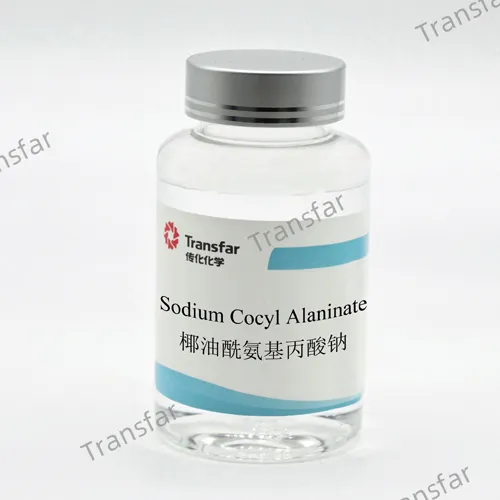
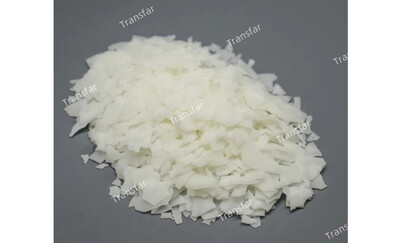
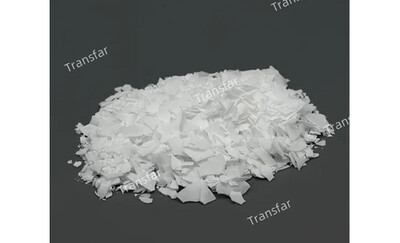
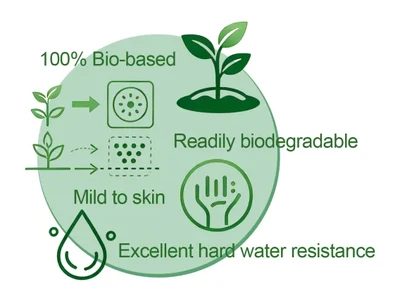
    Sodium cocoyl alaninate — marketed as CA-30 by Transfar, INCI name Sodium Cocoyl Alaninate, CAS 90170-45-9 — is the cocoyl alaninate grade that formulators increasingly select to resolve this paradox. As an amino acid foaming agent derived from alanine and coconut oil fatty acids, it is specifically noted for its performance under acidic conditions, its hard-water resistance, and its suitability for non-sulfate systems — the three properties that a low-pH facial cleanser formulation requires from its primary or co-surfactant. Transfar's CA-30 combines mild cleansing positioning with documented functional performance across decontamination, emulsification, foam stability, and skin compatibility, making it a practical anchor ingredient for 2026 facial cleanser development programs targeting pH-stable surfactant systems and mild facial cleanser ingredient claims.

    Low-pH Cleansing in 2026: Why Foam Drops at Skin-Friendly pH and Why It Matters

    The acid mantle of the skin — the slightly acidic surface environment maintained by sebum, sweat, and the skin microbiome — functions as a barrier against environmental pathogens and supports the enzymatic activity that maintains the stratum corneum's structural integrity. Cleansers formulated at high pH disrupt this environment, raising the skin surface pH temporarily and triggering the tight, dry, squeaky sensation that consumers describe as "over-cleansed." The clinical and consumer research supporting low-pH cleanser formulation has been accumulating for over a decade, and in 2026 it has translated into a mainstream product development requirement rather than a niche positioning.

    The Foam Problem at Low pH

    The foam performance challenge at low pH is a consequence of surfactant chemistry. Anionic surfactants — including most amino acid surfactants — carry their charge through ionized functional groups. At higher pH, these groups are fully ionized, producing the charged head group geometry that drives efficient micelle formation and foam generation. As pH decreases toward the weakly acidic range, partial protonation of the head group reduces the effective charge density of the surfactant molecule, which changes the micelle geometry, reduces the critical micelle concentration efficiency, and can significantly reduce foam volume and stability.

    For many amino acid surfactants — including glycinate and sarcosinate grades — this pH sensitivity is pronounced enough that a formula adjusted from pH 7.0 to pH 5.5 can lose 30 to 50% of its initial foam volume without any change in surfactant concentration. This foam drop is not recoverable by simply increasing the surfactant loading — it requires selecting a surfactant grade whose molecular structure maintains effective micelle formation in the weakly acidic range.

    The Decision Lens for 2026 Formulators

    The correct approach to low-pH facial cleanser formulation is not to start with a surfactant system that performs well at neutral pH and then "acid down" the formula — this approach produces the foam drop and viscosity instability that generate batch failures and consumer complaints. The correct approach is to select pH-stable surfactants that are engineered for weakly acidic performance as the starting point, and then build the rest of the formulation system around that anchor. Sodium cocoyl alaninate is the amino acid foaming agent that most consistently meets this criterion in the pH range that modern facial cleanser formulations target.

    How Sodium Cocoyl Alaninate Maintains Foam and Mildness in Weakly Acidic Systems

    The performance advantage of sodium cocoyl alaninate in low-pH formulations derives from the specific structural characteristics of the alanine head group — a combination of molecular geometry and charge behavior that maintains effective surface activity in the weakly acidic pH range where other amino acid surfactants begin to underperform.

    The Alanine Head Group Advantage

    Sodium cocoyl alaninate is formed by the condensation of coconut oil fatty acid chloride with the amino acid alanine, producing a molecule with a coconut-derived hydrophobic tail and an alanine-derived hydrophilic head group carrying a carboxylate anion. The alanine head group — a methyl-substituted glycine — has a pKa that positions its ionization behavior favorably in the weakly acidic range compared to other amino acid head groups. This means that at pH 5.5 to 6.5, a higher proportion of the sodium cocoyl alaninate molecules remain in their ionized, surface-active form compared to amino acid surfactants with head groups that protonate more readily at these pH values.

    The practical consequence is that sodium cocoyl alaninate maintains its micelle-forming efficiency and foam generation capacity at the pH range that skin-friendly facial cleanser formulations target — producing the dense, fine-bubbled foam that consumers expect without requiring the formula to be adjusted to a higher pH that compromises the skin compatibility positioning.

    Acidic Condition Performance: What Transfar's CA-30 Specification Confirms

    Transfar's CA-30 product description explicitly notes performance under acidic conditions — including antistatic and bactericidal activity, compatibility, and hard-water resistance in acidic environments. This is a meaningful differentiator from amino acid surfactants whose product descriptions do not address acidic condition performance, because it confirms that the grade has been evaluated and positioned for the low-pH application context that facial cleanser formulators require.

    The hard-water resistance noted for CA-30 is a secondary benefit that is relevant for formulators working with municipal water supplies of varying hardness — calcium and magnesium ions can interact with anionic surfactants to form insoluble soaps that reduce foam performance and produce a "scummy" residue. A surfactant with documented hard-water resistance maintains its foam performance across a wider range of water quality conditions, which reduces the formulation complexity required to achieve consistent performance across different markets.

    Skin Barrier and After-Feel Positioning

    The mildness positioning of sodium cocoyl alaninate — its low-irritation profile and skin compatibility — is relevant to the post-wash tightness complaint that is the most common consumer criticism of facial cleansers. Post-wash tightness is caused by a combination of factors: disruption of the skin's lipid barrier by harsh surfactants, temporary elevation of skin surface pH, and removal of natural moisturizing factor components from the stratum corneum. A surfactant system built around sodium cocoyl alaninate as the primary anionic — combined with appropriate humectants and refatting agents — addresses the surfactant contribution to post-wash tightness by reducing the barrier disruption potential of the cleansing system.

    This mildness benefit must be validated in the specific formulation through instrumental testing and consumer panel evaluation — it is a design intent that the surfactant selection supports, not a guaranteed outcome that the ingredient delivers independently of the rest of the formula.

    CA-30 Specification and RFQ Checklist: What to Lock Before Ordering

    Specifying Sodium cocoyl alaninate for a facial cleanser formulation requires locking the raw material parameters that determine both the performance contribution and the batch-to-batch consistency of the ingredient.

    Transfar CA-30 Specification Table

    ParameterSpecificationTest Method
    INCI nameSodium Cocoyl Alaninate
    CAS number90170-45-9
    Appearance (25°C)Colorless to light yellow liquidVisualization
    Color, Hazen≤100GB/T 3143
    pH (10% aqueous solution)8.0 to 10.0GB/T 6368
    Solid content29.0 to 31.0%Q/TFZL J068

    An important clarification for formulators: the raw material pH of 8.0 to 10.0 is the pH of the undiluted ingredient in a 10% aqueous solution — it is not the target pH of the finished formula. The finished formula pH is adjusted at the product level using an appropriate acid (citric acid, lactic acid, or sodium hydroxide for upward adjustment) after all ingredients have been combined. The raw material pH specification confirms the quality and consistency of the ingredient, not the formulation target.

    Recommended Dosage and Compatibility Parameters

    Application RoleActive Content DosageTypical Use Case
    Main surfactant5 to 15% active contentPrimary anionic in sulfate-free facial cleanser
    Vice-surfactant0.5 to 5% active contentCo-anionic alongside betaine or APG in mild system

    Compatibility callouts for low-pH facial cleanser projects: CA-30 is specifically positioned for non-sulfate systems — it is designed to function as the primary anionic in formulations that do not contain SLES or SLS, which is the system architecture that sulfate-free facial cleanser claims require. Its hard-water resistance and acidic condition performance make it suitable for formulations targeting the weakly acidic pH range without requiring chelating agents or water softeners to maintain foam performance.

    Additional Parameters to Request in the RFQ

    Beyond the standard specification table, request the following from the supplier before finalizing the grade selection: batch-to-batch color and odor consistency data, low-temperature clarity specification and rewarming procedure, heavy metal limits (lead, arsenic, mercury, cadmium) for cosmetic compliance, and the SDS and TDS documents that support regulatory filing and production line adoption.

    Application Scenarios: Where Cocoyl Alaninate Wins in Modern Facial Cleanser Design

    Low-pH Facial Cleansing Gels

    Clear and transparent facial cleansing gel formulations — the format that dominates premium facial cleanser launches in 2026 — require a surfactant system that maintains clarity across the pH adjustment range and produces a fine, dense foam without the opacity that some amino acid surfactants introduce at higher concentrations. Sodium cocoyl alaninate at 8 to 12% active content in a betaine co-surfactant system produces the clear gel texture and fine foam profile that this format requires, with the pH stability to maintain performance at the 5.5 to 6.0 target that skin-friendly positioning demands.

    Sensitive Skin and Barrier-Support Cleanser Lines

    For sensitive skin cleanser formulations where the primary consumer concern is post-wash tightness and redness, the combination of sodium cocoyl alaninate as the primary anionic with a betaine co-surfactant and a refatting agent — such as a plant-derived oil or a ceramide precursor — provides the mild cleansing architecture that supports barrier-friendly claims. The low-irritation profile of cocoyl alaninate reduces the surfactant contribution to barrier disruption, and the weakly acidic formula pH supports the skin's natural acid mantle rather than disrupting it.

    Baby Care and Gentle Wash Products

    Transfar lists baby products among the typical applications for CA-30 — a positioning that reflects the ingredient's low-irritation profile and its suitability for the most demanding mildness requirements in the personal care category. Baby wash formulations require a surfactant system that produces adequate foam for consumer confidence while maintaining the lowest possible irritation potential for delicate skin. Sodium cocoyl alaninate at 3 to 8% active content as a co-surfactant in an APG or betaine primary system provides the foam contribution and mildness profile that baby care formulations require.

    Broader Rinse-Off Portfolio Platform

    For brands that want to build a single amino acid surfactant platform ingredient across multiple SKUs — facial cleanser, shampoo, bath gel, and hand wash — sodium cocoyl alaninate provides the formulation flexibility to serve all of these applications from a single raw material. The dosage range (0.5 to 15% active content) covers both primary anionic and co-surfactant roles, and the compatibility with anionic, amphoteric, and nonionic co-surfactant systems allows the same ingredient to be incorporated into different formula architectures without compatibility issues.

    Formulation Integration, Scale-Up, and TCO: Making CA-30 Pay Back in 2026

    Text-Based Selection and Scale-Up Workflow

    Step one: define the target finished-product pH and the required claims. Identify whether the formulation targets a specific pH range — for example, 5.0 to 5.5 for a barrier-support claim, or 5.5 to 6.0 for a general skin-friendly positioning — and confirm the claims that the formula must support: sulfate-free, sensitive skin, baby care, or clean beauty.

    Step two: set the performance targets. Define the foam density and stability target (initial volume and half-life at the target pH), the viscosity window (centipoise range at 25°C), the clarity requirement (clear, translucent, or opaque), and the after-feel target (slip, moistness, absence of tightness).

    Step three: build the surfactant backbone. Use sodium cocoyl alaninate as the primary anionic at 5 to 15% active content for a sulfate-free system, or as a co-anionic at 0.5 to 5% active content alongside a betaine or APG primary surfactant. Confirm the co-surfactant ratio by foam testing at the target pH before committing to the formulation.

    Step four: tune the system for low pH. Select the acid for pH adjustment — citric acid and lactic acid are the most commonly used options for facial cleanser applications — and define the addition order: adjust pH after all surfactants and functional ingredients have been combined, not during the surfactant phase preparation. Select the viscosity-building strategy — electrolyte (sodium chloride) or polymer (carbomer, HPMC) — and confirm that the viscosity response is stable across the pH adjustment range. Confirm preservative compatibility at the target pH.

    Step five: validate with stability and performance testing. Run freeze-thaw cycling (three cycles minimum), elevated temperature stability (45°C for four weeks), viscosity drift measurement, foam testing at the target pH, and irritation proxy testing (HET-CAM or equivalent) before finalizing the formulation for scale-up.

    Maintenance and TCO Framework

    Cost ItemConventional High-pH Sulfate SystemSodium Cocoyl Alaninate Low-pH System
    Consumer tightness complaintsHigher — high-pH formula disrupts acid mantleLower — weakly acidic formula supports skin barrier
    Foam drop at target pHHigher — conventional anionics lose foam below pH 6.5Lower — CA-30 maintains foam performance in weakly acidic range
    Batch rejection rate from pH adjustmentHigher — viscosity and clarity instability after acid additionLower — CA-30 system designed for acidic condition stability
    Sulfate-free reformulation riskHigher — SLES/SLS removal requires complete system rebuildLower — CA-30 is designed for non-sulfate system architecture
    Retailer sustainability scorecard complianceLower — sulfate-containing systems face increasing scrutinyHigher — amino acid surfactant supports clean beauty positioning
    Launch timeline protectionLower — foam and stability failures extend development cyclesHigher — predictable low-pH performance reduces iteration cycles

    Conclusion

    In 2026, the facial cleanser formulation challenge is not choosing between mildness and foam — it is finding the pH-stable surfactant that delivers both at the weakly acidic pH range that skin-friendly positioning requires. Sodium cocoyl alaninate (CA-30) resolves this challenge by maintaining effective foam generation and surface activity in the 5.5 to 6.5 pH range where many amino acid surfactants underperform, while providing the low-irritation profile, hard-water resistance, and non-sulfate system compatibility that modern mild facial cleanser ingredient strategies demand.

    Transfar's CA-30 — INCI Sodium Cocoyl Alaninate, CAS 90170-45-9, solid content 29.0 to 31.0%, recommended at 5 to 15% active content as primary surfactant or 0.5 to 5% as co-surfactant — provides the specification clarity, documented acidic condition performance, and formulation flexibility that a 2026 low-pH facial cleanser development program requires. Visit the Transfar CA-30 product page to review the full specification and submit your formulation requirements for a grade recommendation and quotation.

    Get Your Recommended Grade and Quote

    Visit the Transfar Sodium Cocoyl Alaninate CA-30 product page to review the full specification, then submit the following details to receive a matched recommendation and quotation:

    ParameterWhat to Provide
    Work conditionProduct type (facial gel, cream cleanser, or foaming cleanser), target finished pH, water hardness, clarity requirement, cold or hot process, preservative system constraints
    QuantityLab sample, pilot batch, or monthly demand forecast
    Size and specCA-30 target active matter in formula, packaging (drum or IBC), color and odor limits, viscosity window
    Target metricsFoam volume and density target, mildness target (sensory and test plan), stability targets (viscosity drift and low-temperature stability)
    Current problemFoam drop at pH 5.5 to 6.5, instability after acid adjustment, post-wash tightness complaints, sulfate-free reformulation delays

    FAQ

    1. What is sodium cocoyl alaninate?

    Sodium cocoyl alaninate is an amino acid-derived anionic surfactant (INCI: Sodium Cocoyl Alaninate, CAS 90170-45-9) produced by condensing coconut oil fatty acid with the amino acid alanine. It is used as a primary or co-surfactant in rinse-off personal care products — facial cleansers, shampoos, body washes, and baby care products — where mild cleansing, low-irritation positioning, and performance in weakly acidic formulations are required. Transfar's CA-30 grade is supplied as a colorless to light yellow liquid with 29.0 to 31.0% solid content.

    2. Sodium cocoyl alaninate vs SLES/SLS vs other amino acid surfactants — which is better?

    SLES and SLS provide strong foam and cleansing at neutral to alkaline pH but carry a harsher skin interaction profile and do not support sulfate-free claims. Other amino acid surfactants — glycinate and sarcosinate grades — are excellent mild cleansing options but may show more pronounced foam reduction at pH 5.5 to 6.5 compared to cocoyl alaninate. Sodium cocoyl alaninate is specifically chosen when the formulation targets weakly acidic pH, requires sulfate-free positioning, and needs to maintain foam performance and stability across the pH adjustment range — the combination that low-pH facial cleanser development requires.

    3. Why pay more for an amino acid foaming agent like CA-30?

    The payback comes from three sources. Fewer reformulation cycles — CA-30's documented acidic condition performance reduces the iteration required to achieve stable foam at low pH, protecting the development timeline. Reduced consumer complaints — the lower post-wash tightness profile reduces negative reviews and returns in sensitive skin and premium facial cleanser categories. Fewer batch rejections — the stability of the CA-30 system after pH adjustment reduces the viscosity and clarity failures that generate production waste and delay shipment.

    4. Do we need to modify our production line to use CA-30?

    No major production line retrofit is required. The primary adjustments are mixing order optimization — CA-30 is added to the water phase before co-surfactants and functional ingredients — pH adjustment sequence (adjust after all ingredients are combined, not during surfactant phase preparation), and viscosity-building strategy review to confirm that the electrolyte or polymer response is stable at the target pH. Transfar provides SDS and TDS downloads for CA-30 to support compliant production line adoption and regulatory filing.

    5. What parameters should I provide for correct CA-30 selection and quoting?

    Target finished-product pH range, surfactant system (co-surfactant type and concentration), desired active content level of CA-30 in the formula, clarity and viscosity targets including low-temperature behavior, water hardness, process temperature (cold or hot), preservative system, packaging requirement (drum or IBC), and the primary failure mode you are trying to resolve — foam drop at low pH, instability after acid adjustment, post-wash tightness complaints, or sulfate-free reformulation delays.


    Dr. Geng
    Dr. Geng

    Dr. Geng is a technical writer specializing in the fields of chemical engineering and surfactants, with 10 years of experience in industry research and content creation. He focuses on the niche area of surfactants and excels at translating complex technical principles into accessible content. His articles are both professional and easy to understand, helping readers efficiently acquire specialized knowledge.

    References
    PREV: No information


    Recommended Transfar Surfactant Products

    Related News of Transfar Surfactant Products

    We use cookies to offer you a better browsing experience, analyze site traffic and personalize content. Part of the tracking is necessary to ensure SEO effectiveness,
    By using this site, you agree to our use of cookies. Visit our cookie policy to learn more.
    Reject Accept